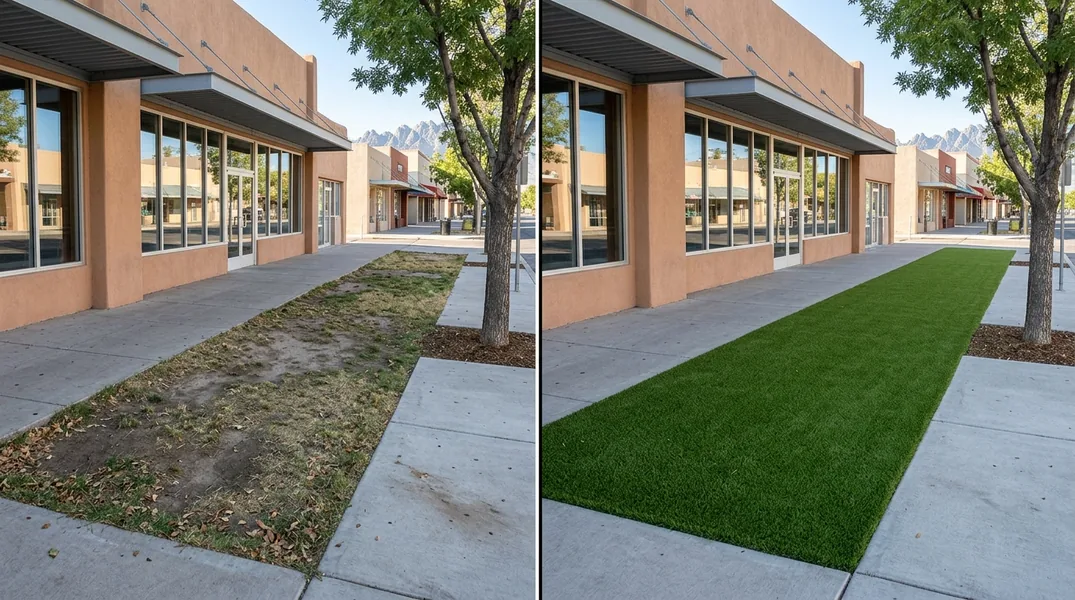
Does Artificial Grass Really Get Hot in Las Cruces?
If you're considering Residential Artificial Grass Installation for your Las Cruces home, you've probably heard the concern: artificial turf gets scorching hot in the desert sun. The question deserves a straightforward answer: yes, artificial grass can absorb and retain heat more than natural grass, but this doesn't mean it's unusable or uncomfortable in our region's intense summer climate.
The reason artificial turf heats up comes down to physics. Natural grass cools itself through transpiration, a process where water evaporates from the plant, creating a cooling effect similar to how sweating cools your skin. Synthetic fibers don't have this biological advantage, so they absorb solar radiation and release it as heat. On a 95-degree Las Cruces summer day, an unshaded artificial grass surface can reach 140 to 160 degrees Fahrenheit. That's certainly hot enough to be uncomfortable for bare feet and potentially unsafe for pets and children. However, the good news is that modern artificial grass technology and smart installation practices have solved most of these concerns.
Understanding Artificial Turf Heat: Why It Matters
Before diving into solutions, it helps to understand why artificial turf heat is a real issue worth addressing. The problem isn't just about comfort, though that matters. Excessive heat can degrade the synthetic fibers over time, breaking down the polymers and shortening your turf's lifespan. In Mesilla and surrounding areas where summer temperatures regularly exceed 100 degrees, this degradation happens faster than in cooler climates. Additionally, if you have pets or young children, a surface that's too hot to touch barefoot creates a genuine safety hazard.
The heat retention issue is compounded by the fact that artificial grass doesn't benefit from the moisture cycle of natural lawns. Real grass stays cooler partly because soil retains moisture and releases it gradually. Artificial turf sits on a base system that doesn't have this natural cooling mechanism. This is why choosing the right infill material and installation method becomes so important for Las Cruces homeowners. A properly installed system with the right infill can reduce surface temperatures by 30 to 50 degrees Fahrenheit compared to standard installations.
Cooling Infill: The Most Effective Heat Solution
The single most impactful way to combat artificial turf heat is selecting the right infill material. Traditional infill options like crumb rubber or silica sand absorb and retain heat, making the problem worse. Modern cooling infill products, however, are specifically engineered to reflect solar radiation and reduce surface temperatures. These materials include zeolite-based infills, thermoreflective silica, and specialized polymer compounds that stay significantly cooler than conventional alternatives.
Cooling infill works by reflecting rather than absorbing the sun's energy. When installed correctly, these products can keep your artificial grass 20 to 40 degrees cooler than traditional infill during peak sunlight hours. For Pet Turf & Dog Run Installation, cooling infill is especially valuable since pets spend extended time on the surface. The investment in premium cooling infill is typically modest compared to the overall cost of installation, and it extends the life of your turf while making the surface usable and safe throughout the summer months. When you're ready to explore cooling infill options for your property, reach out to Las Cruces Artificial Grass Installation at (575) 639-7213 to discuss which products work best for your specific needs.
Shade, Orientation, and Strategic Placement
While cooling infill is the foundation of heat management, strategic use of shade dramatically amplifies its effectiveness. If your installation area receives direct afternoon sun for six or more hours, you're working against the heat challenge. However, you can mitigate this by positioning your artificial grass installation to take advantage of natural shade from trees, structures, or shade structures you install specifically for this purpose. Even partial shade for a few hours during the hottest part of the day makes a noticeable difference in surface temperature and user comfort.
Consider the orientation of your yard and how sun patterns change throughout the day and seasons. A Putting Green Installation on the east side of your home will receive morning sun but benefit from afternoon shade cast by the house. Similarly, areas near patios, pergolas, or mature trees naturally stay cooler. If your yard doesn't have existing shade structures, adding a shade sail, pergola, or even strategic tree planting can provide long-term cooling benefits. In University Park and throughout the region, many homeowners find that combining cooling infill with even modest shade solutions creates a yard that's comfortable and usable even during peak summer heat.
Additional Heat Management Strategies
Beyond cooling infill and shade, several other factors influence how hot your artificial grass gets. The color and pile height of your turf matter. Lighter colored artificial grass reflects more heat than darker varieties, though modern turf designs have improved heat performance across the board. Pile height also plays a role: shorter, denser turf tends to heat up more than taller, more open fiber structures because of how light interacts with the surface. When selecting your turf product, discussing these variables with your installation team helps ensure you're choosing a system optimized for Las Cruces' climate.
Proper drainage and base installation also contribute to heat management. A well-constructed base with appropriate drainage prevents water from pooling and creating additional heat issues. Some homeowners find that light watering or misting their artificial grass during extreme heat events provides temporary relief, similar to how a sprinkler cools a natural lawn. While this isn't a long-term solution and uses water, it's an option on the hottest days, especially for Pool Surround Turf areas where water is already present.
Residential Artificial Grass Installation Near Me: Getting Professional Guidance
The heat question is best addressed during the planning and installation phase, not after your turf is already installed. A professional installation team understands the specific challenges of Doña Ana County's climate and can recommend products and strategies tailored to your property. They'll assess your sun exposure, recommend appropriate cooling infill, and suggest shade solutions that complement your landscape design. This personalized approach ensures your artificial grass installation performs well for years to come.
When you're ready to move forward with Residential Artificial Grass Installation, don't hesitate to ask detailed questions about heat management. A reputable installer will be transparent about the thermal properties of different turf and infill options and help you understand the trade-offs between aesthetics, durability, and heat performance. Las Cruces Artificial Grass Installation specializes in desert climate installations and can provide a free estimate that addresses your heat concerns alongside your other needs. Call (575) 639-7213 today to schedule a consultation and learn how to create an artificial grass yard that's both beautiful and comfortable year-round.
Looking for a professional artificial grass installation company in Las Cruces? Las Cruces Artificial Grass Installation responds fast for all your artificial grass installation needs.
Get a Free Quote