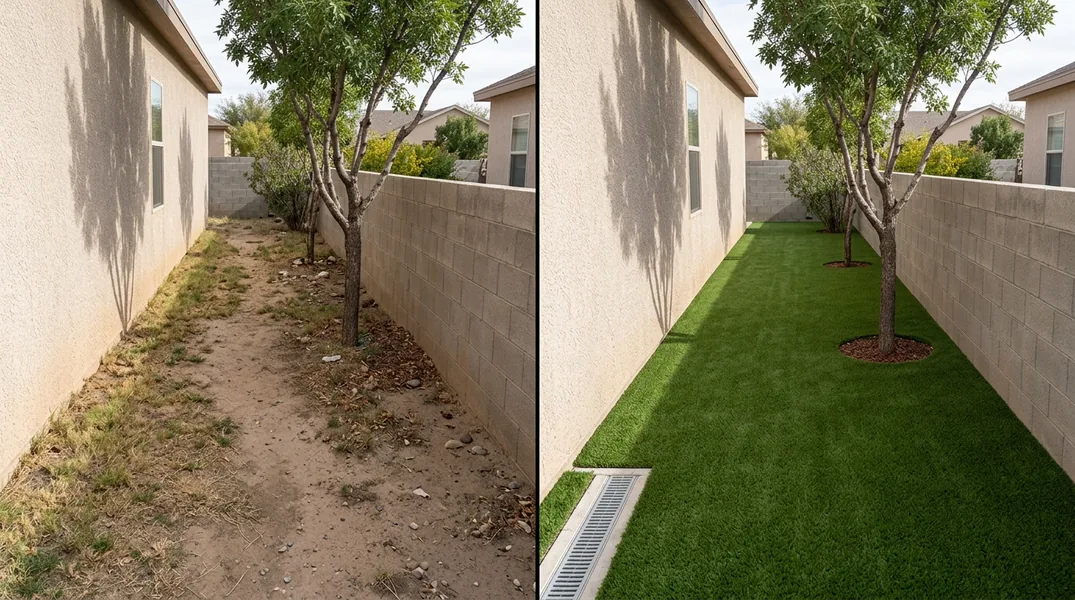
The Las Cruces Climate Challenge: Why Your Lawn Struggles
If you live in Las Cruces, you already know the climate isn't kind to traditional lawns. The Chihuahuan Desert brings intense summer heat, minimal rainfall, and intense UV exposure that can turn even a well-maintained natural grass lawn into a brown, patchy mess by mid-July. Most homeowners in the area attempt to grow Bermuda grass, which is drought tolerant by desert standards, but even Bermuda requires consistent watering, fertilization, and active management during the growing season.
The real challenge emerges during winter dormancy. Bermuda grass goes completely brown from November through March, leaving your yard looking dead for nearly four months. Many homeowners find this dormant period unsightly and end up overseeding with rye grass or applying cosmetic treatments to maintain year-round green appearance. This adds cost, complexity, and water consumption to an already demanding maintenance schedule. When you factor in the intense desert sun, alkaline soil conditions, and the region's limited water availability, maintaining a vibrant natural lawn in Las Cruces becomes an uphill battle.
Turf vs Artificial Grass: Understanding the Real Differences
The comparison between turf vs artificial grass isn't as simple as picking the greener option. Real turf (natural grass) offers genuine environmental benefits when managed properly, including air purification, temperature regulation, and soil health. However, in an arid climate like Las Cruces, these benefits come at a significant cost in water, chemicals, and ongoing labor. A typical residential lawn in the region requires 40 to 60 percent more water than native desert plants, and that's before you account for the fertilizers and pesticides needed to keep grass healthy in unfavorable soil conditions.
Artificial grass, by contrast, requires zero water, no fertilizer, no pesticides, and minimal maintenance beyond occasional rinsing and brushing. Modern synthetic turf looks remarkably realistic, drains properly, and lasts 15 to 20 years with proper installation. The trade-off is the upfront cost and the fact that it's not a living ecosystem. For homeowners in Mesilla and surrounding areas who value time, water conservation, and year-round aesthetics, artificial grass solves the climate problem entirely. The decision ultimately depends on your priorities: environmental puritanism and seasonal beauty with real grass, or convenience, water savings, and consistent appearance with synthetic turf.
Artificial Grass vs Real Grass: Water Use and Drought Tolerance
Water consumption is perhaps the most compelling argument for artificial grass vs real grass in the desert Southwest. A mature natural lawn in Doña Ana County typically requires 1 to 1.5 inches of water per week during the growing season, whether from rainfall or irrigation. Over a typical 5,000-square-foot residential property, that translates to 30,000 to 45,000 gallons of water annually just to keep grass alive. With New Mexico's ongoing drought conditions and increasing water restrictions in many municipalities, this level of consumption simply isn't sustainable for environmentally conscious homeowners.
Artificial turf eliminates this water demand entirely. Residential Artificial Grass Installation provides a landscape solution that requires no irrigation whatsoever. You might rinse the turf occasionally to remove dust or debris, but this uses a fraction of the water needed for a natural lawn. For homeowners committed to drought-tolerant landscaping and xeriscaping principles, artificial grass represents a genuine water conservation tool. If you're interested in exploring this option for your property, reach out to Las Cruces Artificial Grass Installation at (575) 639-7213 to discuss how much water and money you could save.
Xeriscaping and Drought Tolerant Landscaping: Where Artificial Turf Fits
Xeriscaping is a landscaping philosophy centered on water conservation through thoughtful plant selection, efficient irrigation, and reduced turf areas. Drought tolerant landscaping takes this further by replacing water-hungry plants and lawns with native species, hardscape features, and ground covers that thrive with minimal supplemental water. In this context, artificial grass serves a specific purpose: it allows homeowners to maintain a functional outdoor living space without sacrificing their commitment to water conservation.
Many University Park and Las Cruces homeowners use artificial turf as a complement to xeriscaping rather than a replacement for it. You might install synthetic grass in high-traffic areas like play zones or entertainment spaces, while surrounding it with native desert plants, rock features, and mulch beds. This hybrid approach gives you the usable lawn space you want while maintaining the water-efficient principles of true xeriscaping. Pet Turf & Dog Run Installation is another practical application where artificial grass excels, providing a durable, clean surface for pets without the water waste or maintenance demands of natural turf.
Maintenance, Durability, and Long-Term Value
When evaluating turf vs artificial grass, maintenance burden often gets overlooked in favor of initial appearance. Natural grass in the desert requires weekly mowing during the growing season, regular fertilization, pest and disease management, aeration, dethatching, and constant watering. Over a typical five-year period, these costs add up quickly. You're looking at equipment purchases, fuel, water bills, fertilizer, herbicides, and either your own time or professional landscaping services. For most homeowners, the cumulative cost of maintaining a natural lawn in Las Cruces exceeds the upfront investment in quality artificial grass.
Modern artificial turf is engineered for durability and longevity. Premium synthetic grass products last 15 to 20 years with minimal maintenance. Your primary tasks involve occasional brushing to restore the turf pile, rinsing to remove dust, and removing any debris or leaves that accumulate. There's no mowing, no watering, no chemical applications, and no seasonal dormancy to manage. When you factor in water savings, eliminated equipment costs, and reduced labor, the long-term financial picture strongly favors artificial grass. If you'd like a detailed breakdown of how artificial turf could save you money and time on your specific property, contact Las Cruces Artificial Grass Installation for a free estimate.
Residential Artificial Grass Installation Cost in Las Cruces: What to Budget
The upfront investment in artificial grass typically ranges from $8 to $15 per square foot installed, depending on turf quality, site preparation requirements, and drainage solutions. For a typical 1,500-square-foot residential lawn, you should budget between $12,000 and $22,500 for professional installation. This might seem substantial compared to the cost of seed or sod, but it's essential to view this as a 15 to 20-year investment rather than an annual expense. When you compare the total cost of ownership between artificial grass and natural lawn maintenance over two decades, artificial turf typically comes out ahead, especially in an arid climate like Las Cruces.
Several factors influence the final pricing of your project. Existing lawn removal and site grading add to preparation costs. Drainage systems, which are critical in desert climates to prevent water pooling, represent an important investment. The quality grade of the artificial turf itself varies significantly, with premium products offering better aesthetics, durability, and realistic appearance. Additionally, specialized applications like Pool Surround Turf or Putting Green Installation may involve different pricing structures. To understand the true investment for your specific property and get an accurate quote, contact Las Cruces Artificial Grass Installation at (575) 639-7213 or request a free estimate online.
Looking for a professional artificial grass installation company in Las Cruces? Las Cruces Artificial Grass Installation responds fast for all your artificial grass installation needs.
Get a Free Quote